
GIS and Machine Learning for Small Area Classifications in Developing Countries
Product details
| Management number | 231813463 | Release Date | 2026/06/18 | List Price | US$24.48 | Model Number | 231813463 | ||
|---|---|---|---|---|---|---|---|---|---|
| Category | |||||||||
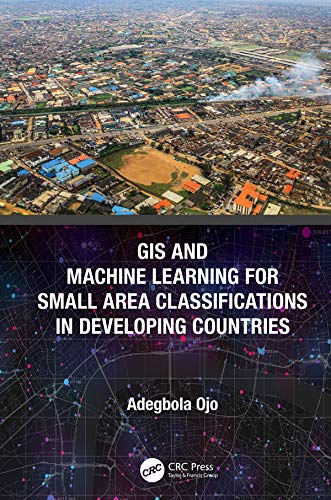
Since the emergence of contemporary area classifications, population geography has witnessed a renaissance in the area of policy related spatial analysis. Area classifications subsume geodemographic systems which often use data mining techniques and machine learning algorithms to simplify large and complex bodies of information about people and the places in which they live, work and undertake other social activities. Outputs developed from the grouping of small geographical areas on the basis of multi- dimensional data have proved beneficial particularly for decision-making in the commercial sectors of a vast number of countries in the northern hemisphere. This book argues that small area classifications offer countries in the Global South a distinct opportunity to address human population policy related challenges in novel ways using area-based initiatives and evidence-based methods.This book exposes researchers, practitioners, and students to small area segmentation techniques for understanding, interpreting, and visualizing the configuration, dynamics, and correlates of development policy challenges at small spatial scales. It presents strategic and operational responses to these challenges in cost effective ways. Using two developing countries as case studies, the book connects new transdisciplinary ways of thinking about social and spatial inequalities from a scientific perspective with GIS and Data Science. This offers all stakeholders a framework for engaging in practical dialogue on development policy within urban and rural settings, based on real-world examples.Features:The first book to address the huge potential of small area segmentation for sustainable development, combining explanations of concepts, a range of techniques, and current applications. Includes case studies focused on core challenges that confront developing countries and provides thorough analytical appraisal of issues that resonate with audiences from the Global South. Combines GIS and machine learning methods for studying interrelated disciplines such as Demography, Urban Science, Sociology, Statistics, Sustainable Development and Public Policy. Uses a multi-method approach and analytical techniques of primary and secondary data. Embraces a balanced, chronological, and well sequenced presentation of information, which is very practical for readers. Read more
| ASIN | B08N1J4WMQ |
|---|---|
| Format | Print Replica |
| ISBN13 | 978-1000289374 |
| Edition | 1st |
| Language | English |
| File size | 30.4 MB |
| Page Flip | Not Enabled |
| Publisher | CRC Press |
| Word Wise | Not Enabled |
| Print length | 268 pages |
| Accessibility | Learn more |
| Publication date | December 29, 2020 |
| XRay for textbooks | Enabled |
| Enhanced typesetting | Not Enabled |
Bestseller ranking
Sunglasses





Customers who viewed this product also viewed
Relations





Correction of product information
If you notice any omissions or errors in the product information on this page, please use the correction request form below.
Correction Request Form